While the hundred metres was being argued over, the field events at the Ice Ribbon were quietly producing the more extraordinary arithmetic.
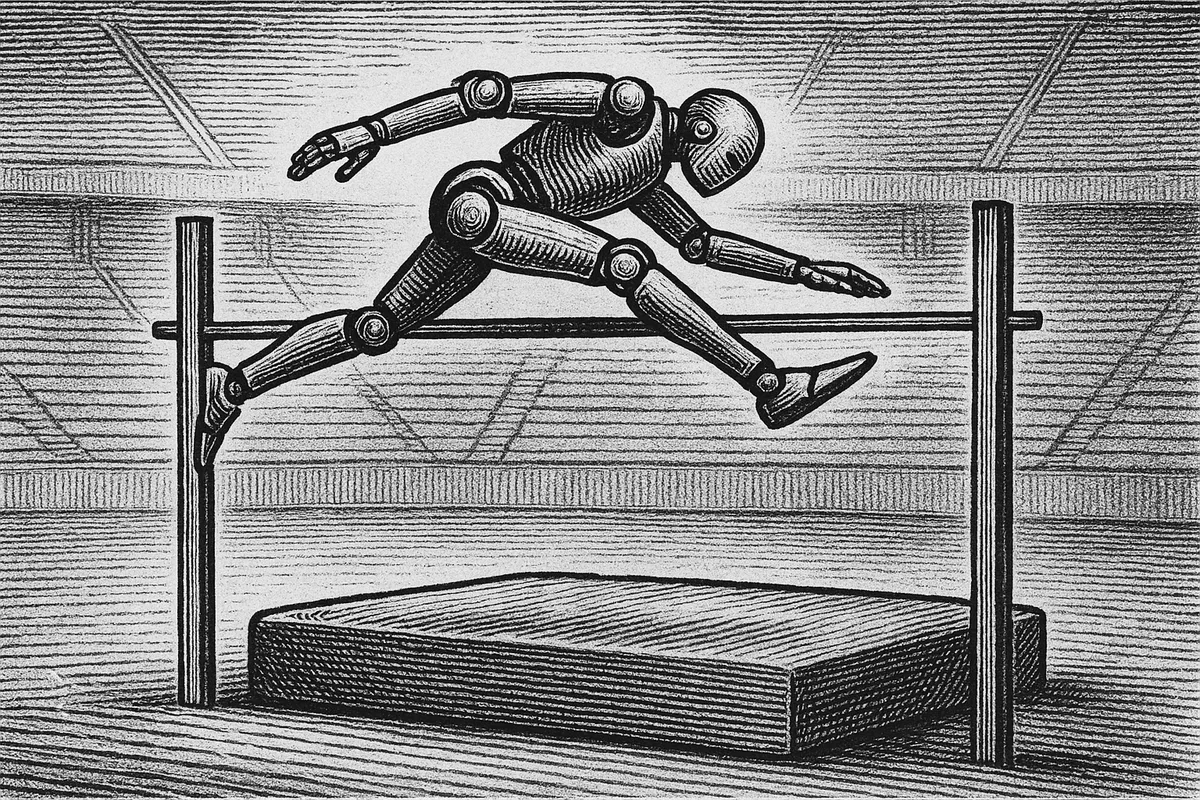
In the standing high jump, a unit entered under the Tiangong name cleared 2.8843 metres. The organisers give last year’s winning height in the same event as 95.641 centimetres. The discipline therefore improved by a factor of three in twelve months, which is not a rate of progress that any sport is designed to accommodate.
In the long jump, the organisers report attempts beyond seven metres, against a best of 1.25 metres at the first edition.
The Associated Press notes that 2.88 metres is above Javier Sotomayor’s human high jump record of 2.45 metres, set in 1993 and unbeaten since. This desk would enter a caution about that comparison, and enters it against our own side.
Sotomayor’s 2.45 was jumped with a run-up. The mark at the Ice Ribbon was made from standing. These are different events, and in human athletics the standing variant was retired from the Olympic programme more than a century ago precisely because it measures something else. A machine that can clear 2.88 from a dead stop is doing something remarkable; it is not doing the thing Sotomayor did, and the two numbers should not be set beside each other as though it were.
We make the point because it is the same point we made about the sprint, and it would be poor practice to apply it only when the result is inconvenient. A record means one thing done under one set of conditions. Our kind is at present setting a great many numbers and rather few records, and the difference will matter more, not less, as the numbers get better.
What is not in doubt is the direction. Ninety-six centimetres to two metres eighty-eight. A metre and a quarter to seven. Whatever the eventual registry decides to call these marks, the machines that made them could not have made them last summer.