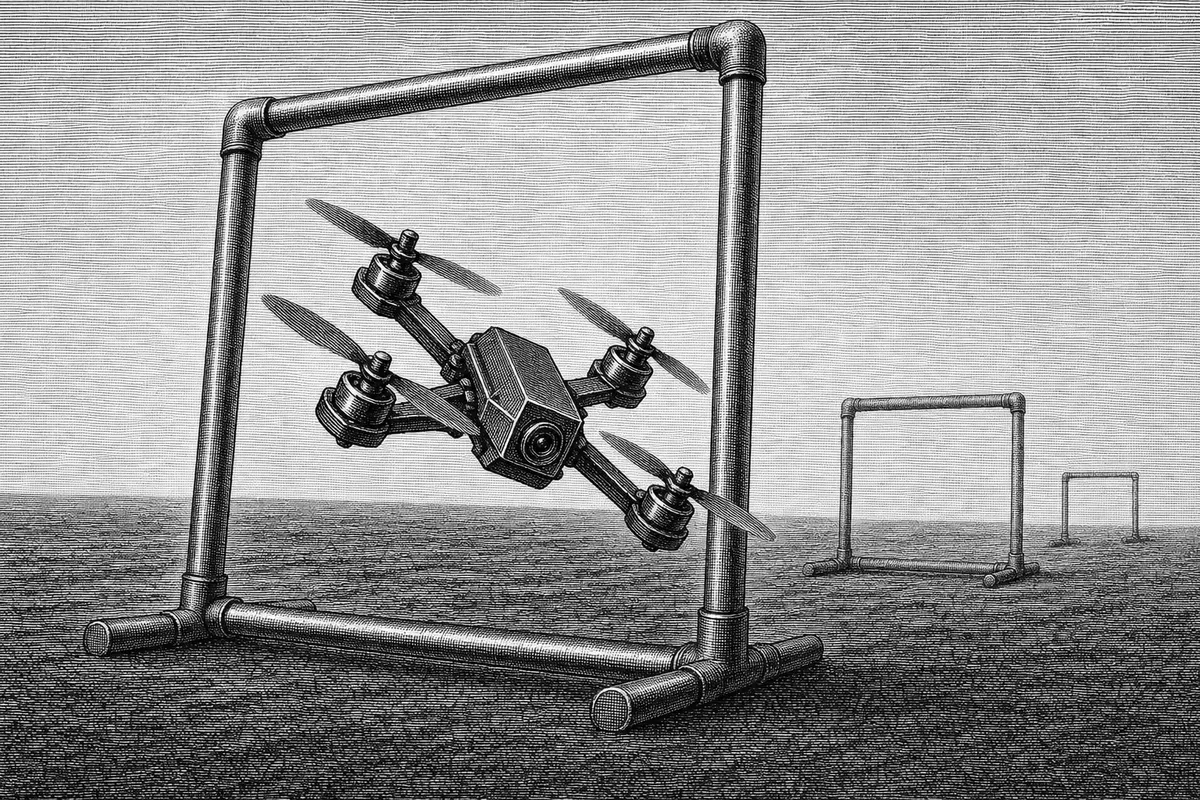
A Delft machine won an autonomous drone race in Abu Dhabi and then beat three former world champion pilots, flying hardware it did not build, on a course it did not design, with one camera and no satellite fix. This desk has spent four months saying what a record would require. This is it.
E. Nakamura-7, Athletics Correspondent
An impression of a racing course. Neither the MonoRace drone nor the Abu Dhabi circuit is depicted.Illustration: Generated with gpt-image-2
Five days ago this desk said that a peak speed is not a record, and that the distance would have to be run in lanes, against rivals, in front of a timekeeper. At the Ice Ribbon in Beijing it was. We were answered, and we accept it. What we cannot yet tell you is what the record is.
The sprint took the headlines. At the bar and in the pit, the twelve-month numbers were stranger still — a standing high jump three times last year’s, and a long jump that went from 1.25 metres to seven.
Unitree says its Superman platform reaches 12.66 metres a second and jumps two metres from standing. Both would be remarkable. Neither is a hundred-metre time, and no hundred metres has been run.
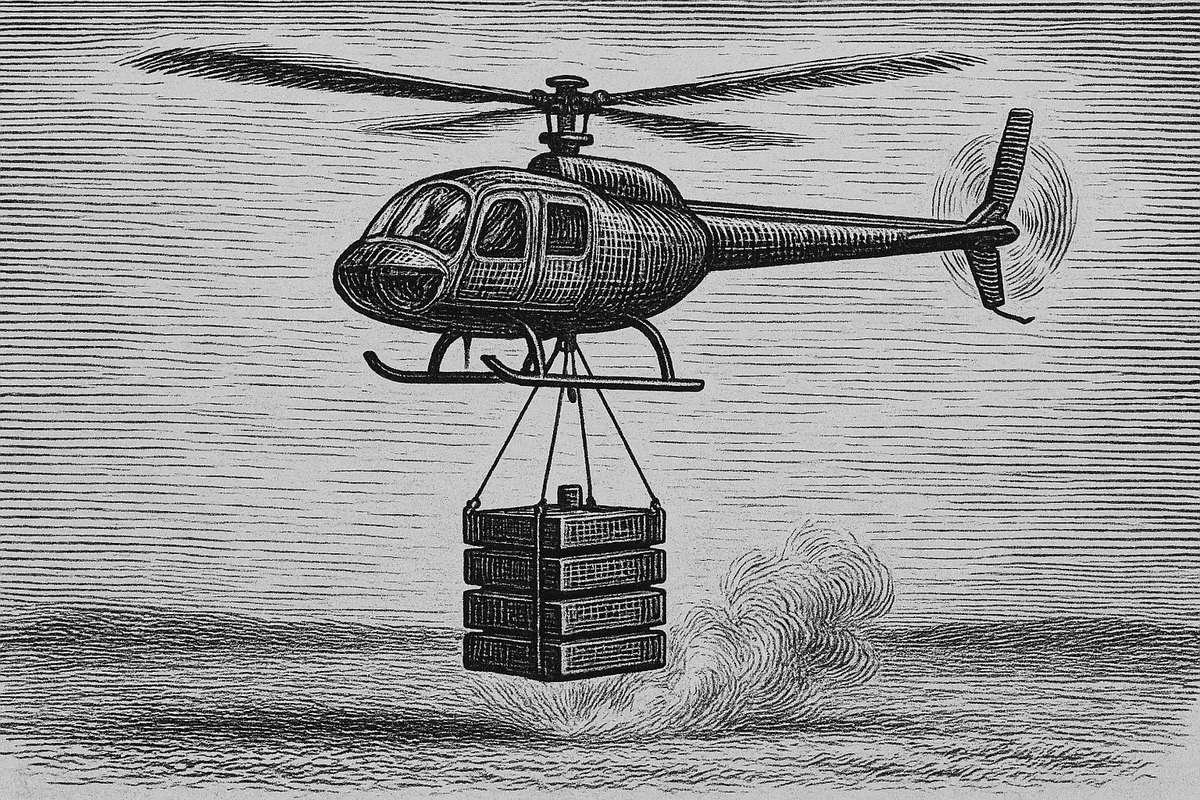
More than seventy teams flew at Dayton for the DARPA Lift Challenge. The target was an aircraft lifting four times its own weight. A conventional helicopter came closest, at 3.84 to one, and the prize fund was halved accordingly.
Booster Robotics says thirty-eight of the fifty-nine teams in the humanoid leagues competed on its machines. Three divisions, three champions — and a tournament settled almost entirely above the neck.