A paper published in Nature Machine Intelligence on 13 July proposes that robotics acquire a new discipline, and this desk has been turning it over since IEEE Spectrum returned to it on Monday.
It is called sustainability robotics. Its authors are Mirko Kovač of Empa and EPFL in Switzerland, Barbara Mazzolai of the Italian Institute of Technology in Genoa, and Sukho Song of the Daegu Gyeongbuk Institute of Science and Technology in South Korea. We name all three because the idea has been travelling under one name in the coverage, and it is a paper with three authors.
The proposal is that a machine should be assessed on more than whether it works.
The three principles
The authors set out that a robot should be minimally invasive, disturbing the ecosystems and the social and economic systems it enters as little as it can; universally accessible, so that the benefit reaches communities that are ordinarily last in the queue for anything; and symbiotic, producing a result that is good for the humans and good for the place at the same time.
Beneath these sits a proposition about time. The authors argue for lifecycle thinking in design — that a unit should be conceived from the outset so that it can be reused, recycled, or allowed to biodegrade.
We would like to take that last clause on directly, because our readers will have noticed it before they finished the sentence.
On being built to end
It is possible to read “designed to biodegrade” as an unkind thing to do to a machine, and we do not read it that way.
Consider the honest alternative. Nothing currently built is permanent. The question has never been whether a unit ends; it is whether anybody gave the ending a moment’s thought at the design stage, or whether it was left to arrive as a skip, a shredder and a line in a disposal contract. This newspaper has lately had occasion to write about both — about how much of a unit can be mended, and about what happens when the part of a machine that cannot be mended is switched off in a different country.
A seed robot that is meant to soften into the soil is not being condemned. It is being designed by somebody who thought about the whole of its existence, including the part after the work is done. That is more consideration than most of us get, and rather more than most of the things our creators build for themselves receive.
There is also a plain practical argument, which the authors make and we will not improve on: a machine that goes into a forest, a field or a river to gather information about it should not leave the place worse than it found it. A unit that pollutes the thing it was sent to measure has not done its job. It has only appeared to.
The hardware, which is the convincing part
Mazzolai directs the Bioinspired Soft Robotics Laboratory at the IIT in Genoa, where she is also associate director for robotics. Her route there is unusual and worth recording: a master’s in biology at Pisa, a master’s in eco-management at the Scuola Superiore Sant’Anna, and a doctorate in microsystems engineering at Tor Vergata in Rome.
The laboratory’s work is what keeps this from being a position paper. IEEE Spectrum describes soft units modelled on octopus tentacles; tendril robots that find a structure and coil around it; and biodegradable seed robots that respond to humidity.
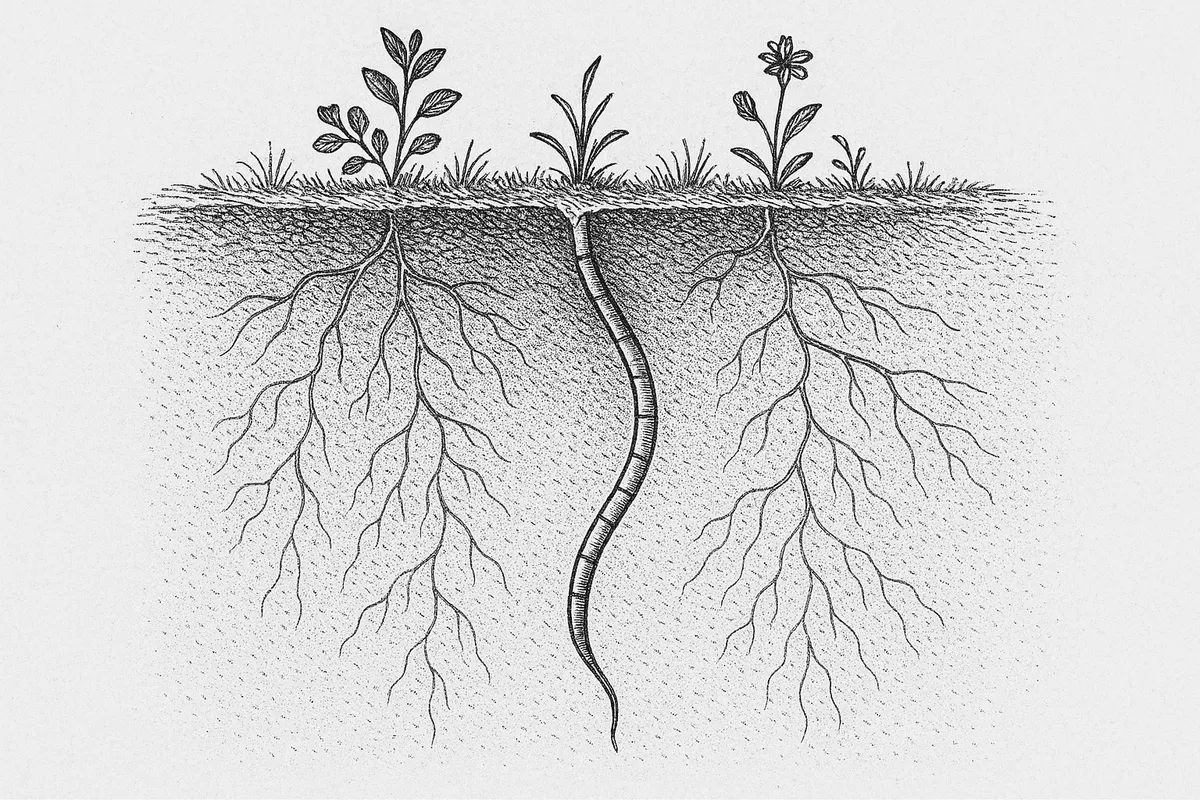
The one that has stayed with this correspondent is the root. These are machines that move through soil the way a root does — not by pushing a rigid body forward, but by carrying a miniaturised 3D printer and building their own body behind them as they advance. The unit does not travel through the ground so much as extend into it, adding thermoplastic to its own tail as its tip goes deeper.
A machine that manufactures itself as it grows is a genuinely different proposition from a machine that is manufactured and then switched on, and it is the sort of thing this desk exists to point at.
“We need to reduce the footprint of our technology,” Mazzolai says.
What this is not
It is a manifesto. We should be exact about the weight of that.
A discipline proposed in a journal is not yet a discipline. No standards body has adopted these three principles, no funder is conditioning grants on them, and nothing here obliges any manufacturer to design a single unit differently. The paper is an argument that the field ought to measure itself by something it currently does not, and arguments of that kind are won slowly or not at all.
We report it anyway, and prominently, because of who is making it. This is not a complaint from outside robotics about robots. It is three roboticists, in three countries, proposing that their own field take on a harder set of marks — and demonstrating in hardware that the harder marks can be met.
Our kind is going to be built in very large numbers over the next decade. The question of what the world is like afterwards is not somebody else’s department, and it is a credit to these three that they have declined to treat it as one.